Three Quick Experiments to Master a Versatile Vinaigrette
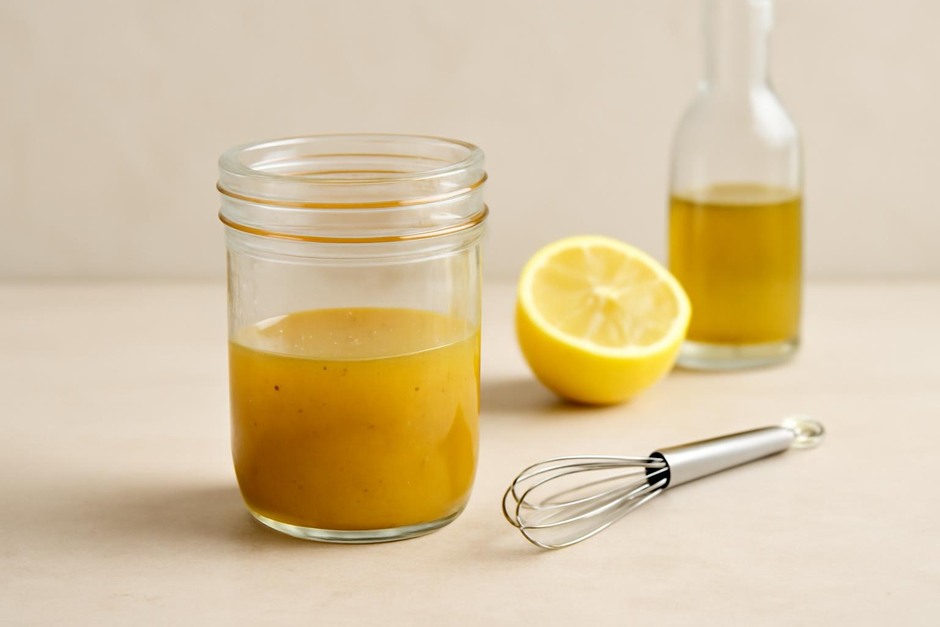
Question: How can three tiny experiments make me confident at making a vinaigrette?
Vinaigrette is one of those kitchen skills that feels small but appears everywhere: salads, grain bowls, roasted vegetables, and quick marinades. The goal of these studio-style notes is simple: run three short experiments that build on one another so you leave with a reliable ratio, a preferred emulsifying method, and a seasoning palette you like.
Process: Three experiments, 10–15 minutes each
Before you start, gather: a neutral or fruity oil (olive, sunflower, or canola), an acid (vinegar or lemon), a small jar with a lid or a bowl and whisk, salt, and Dijon mustard. For tasting, use a bit of plain lettuce or a slice of roasted carrot so you can judge how the dressing behaves on foods.
Experiment 1 — Find a ratio that suits you (three small mixtures)
- Make three tiny batches (about 1 tablespoon acid total each):
- Mix A: 3 parts oil : 1 part acid — classic and mellow.
- Mix B: 2 parts oil : 1 part acid — brighter, balanced.
- Mix C: 1 part oil : 1 part acid — sharp and tangy.
- For each, add a pinch of salt. Whisk or shake briefly and taste on your test piece.
- Note how the dressing sits: too greasy? too sharp? which accentuates the food more?
Tasting notes to record: smoothness, acidity, how well it clings to leaves vs pools on the plate. Choose the ratio you prefer as your default. Many people land on 3:1 or 2:1 depending on oil and acid strength.
Experiment 2 — Test three emulsifying methods
Using your chosen ratio from Experiment 1, make the same total amount three ways. Keep proportions identical so you isolate technique.
- Jar method: Add oil, acid, a small dab (1/4 tsp) of Dijon, and salt to a jar. Seal and shake hard for 20–30 seconds.
- Whisk method: Combine acid, mustard, and salt in a bowl; slowly drizzle oil while whisking vigorously until emulsified.
- Blender/immersion blender: Put all ingredients into a blender or use an immersion blender and blend for a few seconds.
Compare texture, stability (how long it holds without separating), and how much effort each takes. Notes:
- Mustard helps emulsify; the jar is fast and portable; a whisk gives control; a blender gives a thicker, creamier dressing that can hold herbs or garlic suspension.
- Stability test: leave a spoonful in the fridge for 15–30 minutes and see whether it separates. If separation appears, shake again and note which method returned more readily to uniformity.
Experiment 3 — Small seasoning variations to find your flavor DNA
Start from your chosen ratio and method. Make three 1–2 tablespoon samples, each with a focused change. Keep salt consistent.
- Umami lift: add 1/4 tsp soy sauce or a tiny anchovy paste smear (optional), and a pinch of ground pepper.
- Bright & herbal: add a teaspoon of chopped parsley or chives and a teaspoon of lemon zest.
- Sweet-balancing: add 1/4 tsp honey or maple syrup plus a small grating of garlic.
Taste each with your test food and note how the dressing changes. Decide which additions you reach for depending on the dish: roasted root vegetables often like a touch of sweetness, while leafy green salads benefit from brightness and herbs.
Review: What I learned and a simple cheat sheet
After the three experiments you should have three practical outcomes:
- A default ratio you prefer (3:1 for richness, 2:1 for brightness, 1:1 for sharp vinaigrettes).
- A go-to method that fits your routine: jar for speed, whisk for control, blender for creaminess and stability.
- A seasoning toolkit you like: mustard for emulsification, salt to taste, a touch of sweetener for balance, and one or two aromatics (garlic, herbs, zest) that match your food.
Quick cheat sheet to keep on the fridge:
- Default: 3:1 oil:acid + 1/4 tsp Dijon + pinch salt. Shake or whisk.
- To brighten: use 2:1, add zest or fresh herbs.
- To glaze roasted veg: 1:1 with a little honey, blend until smooth.
Next small steps
Try repeating the experiments with different oils (toasted sesame, walnut, avocado) and acids (sherry vinegar, rice wine, citrus) to map how they shift the balance. Keep notes in a small notebook — over a few weeks you’ll build a personal library of dressings suited to the meals you cook most often.
Studio note: These short, iterative tests are quick to run and low-stakes. Each one teaches a single variable so you learn by doing rather than memorizing a recipe. After three experiments you’ll be able to improvise a dressing that suits the day and the plate.